Hague Convention Child Abduction Lawyers in Pakistan
At Zia Law Firm, our experienced Hague Convention lawyers in Pakistan provide urgent legal assistance for international parental child abduction cases. We handle wrongful removal, wrongful retention, custody disputes, and return petitions under the Hague Convention on the Civil Aspects of International Child Abduction (1980), as implemented in Pakistan.
Under Pakistani law: Pakistan acceded to the Hague Convention in 2016. The Convention is implemented through the Hague Convention Act, 2016 (Act No. X of 2016). The Act designates the Ministry of Law as the Central Authority. Applications for return of children are filed in the Central authority Pakistan, Family Courts or High Courts (depending on Case). The principle of habitual residence determines which country's court has jurisdiction.
Key forums: Family Courts (for return applications), High Courts (for appeals and writ petitions), and the Supreme Court (for final appeals). The Central Authority coordinates with foreign counterparts under Article 8 of the Convention.
Google Rated 5/5
★★★★★
Hague Convention
Hague Convention & International Child Abduction Services
Expert legal representation for international parental child abduction cases under the Hague Convention 1980, including return petitions, wrongful retention defense, custody disputes, and appeals in Pakistani courts.
Hague Return Petitions
Article 8-11 - Hague Convention 1980
Filing and defending return applications under the Hague Convention 1980 and the Hague Convention Act, 2016 in Family Courts and High Courts. We represent left-behind parents seeking the prompt return of their children.
Return petitions for abducted children
Representation for left-behind parents
Expedited hearings (6-week timeline)
Enforcement of return orders
Wrongful Retention Defense
Article 3 & 13 - Hague Convention
Representing parents accused of wrongful retention of a child in Pakistan after the child's habitual residence was in another Convention country. We build strong defenses under Article 13 of the Convention.
Defending retention allegations
Establishing habitual residence
Raising treaty-based defenses
Cross-border evidence gathering
International Custody Disputes
Guardians & Wards Act 1890 & Hague Convention
Legal representation in cross-border custody disputes involving Pakistan and other Convention countries, including the UK, USA, UAE, and EU states. We handle jurisdiction and recognition of foreign orders.
Custody jurisdiction disputes
Habitual residence determination
Coordination with foreign counsel
Recognition of foreign custody orders
✦ OUR LAWYERS
Meet Our Lawyers
Our experienced Hague Convention and international child abduction lawyers in Pakistan handle return petitions, wrongful retention defense, custody disputes, and appeals under the Hague Convention 1980.
Advocate Atif Zia Khattak is a leading Hague Convention lawyer in Peshawar, specializing in international child abduction cases, wrongful retention, and cross-border custody disputes under the Hague Convention 1980 and Pakistani law.
Advocate Syed Muhammad Ishaq Shah has extensive experience in family law, guardianship, and international custody disputes, representing both left-behind parents and respondents in Hague Convention cases.
High Court AppealsWrit PetitionsTreaty Interpretation
Advocate Ahsan Masood specializes in High Court appeals and constitutional writ petitions arising from Hague Convention orders, focusing on habitual residence, treaty interpretation, and procedural irregularities.
Expert legal representation for international parental child abduction cases under the Hague Convention 1980, including return petitions, wrongful retention defense, custody disputes, Central Authority applications, and appeals.
Expert answers to common Hague Convention and international child abduction questions under Pakistani law.
Yes, Pakistan acceded to the Hague Convention on the Civil Aspects of International Child Abduction (1980) on December 22, 2016. The Convention entered into force for Pakistan on March 1, 2017. It is implemented domestically through the Hague Convention Act, 2016 (Act No. X of 2016). The Ministry of Human Rights is designated as the Central Authority for Pakistan under Article 6 of the Convention.
A return petition under the Hague Convention is filed in the Family Court having jurisdiction over the child's location in Pakistan. The petition must establish: (i) the child's habitual residence was in another Convention country, (ii) the removal or retention was wrongful, and (iii) custody rights were being exercised. The court must decide within 6 weeks under Article 11. The application can also be filed through the Central Authority under Article 8.
Under Article 13 of the Hague Convention, recognized defenses include: (a) grave risk of harm to the child if returned, (b) child's objection (if the child is of sufficient age and maturity), (c) consent or acquiescence by the left-behind parent, and (d) the child has settled in the new country (if more than one year has passed). These defenses are interpreted narrowly by Pakistani courts.
Habitual residence is the child's center of interests — the place where the child has lived for a sufficient period with the intent to stay. Under Article 3 of the Convention, the child's habitual residence determines which country's court has jurisdiction. Pakistani courts consider factors such as the child's schooling, social connections, family ties, and the parents' intent. It is not the same as nationality or domicile.
No. Under Article 16 of the Hague Convention, Pakistani courts cannot decide custody in a return proceeding. The court's only role is to determine whether the child should be returned to the country of habitual residence. Custody is decided by the court in the child's habitual residence. This separation ensures the Convention's purpose of deterring child abduction is upheld.
Top Hague Convention and international child abduction lawyers in Peshawar include Advocate Atif Zia Khattak (specializing in Hague return petitions and cross-border custody disputes), Advocate Syed Muhammad Ishaq Shah (experienced in family law and international custody matters), and Advocate Ahsan Masood Khan (handling writ petitions and appeals in High Courts). All are members of the Peshawar High Court Bar and have experience in international family law.
✦ OUR LEGAL BLOGS
Legal Blogs & Insights
Read our expert legal blogs on the Hague Convention, international child abduction, wrongful retention, and cross-border custody disputes under Pakistani law.
Hague Convention on International Child Abduction in Pakistan — A Legal Guide for Parents
Advocate Atif ziaMay 8, 2026
International child custody disputes are among the most emotionally charged matters in family law. Pakistan's accession to the Hague Convention in 2016 marked a significant step forward. Learn about wrongful removal, filing procedures, and countries where Pakistan's accession is enforceable.
When a Temporary Move Becomes Permanent: How Courts Decide a Child's "Habitual Residence" Under the Hague Convention
Advocate Atif ziaJune 20, 2026
A landmark Eighth Circuit case reveals why parental intent isn't everything. Learn how courts determine a child's habitual residence under the Hague Convention and why a "temporary" move can become permanent in the eyes of the law.
When Treaty Timing Determines Destiny: The Hague Convention's Critical Temporal Requirement
Advocate Atif ziaJune 20, 2026
A Second Circuit decision that redefined the boundaries of international child abduction law. Learn about the critical temporal requirement under Article 35, the bilateral entry into force requirement under Article 38, and why treaty timing can determine your case.
When a Child Says "I Want to Stay": Understanding the Mature Child Defense in International Custody Cases
Advocate Atif ziaJune 20, 2026
How courts distinguish between a child's preference and a genuine objection under the Hague Convention. Analysis of Dubikovskyy v. Goun and why a child saying "I want to stay" is not enough to prevent return.
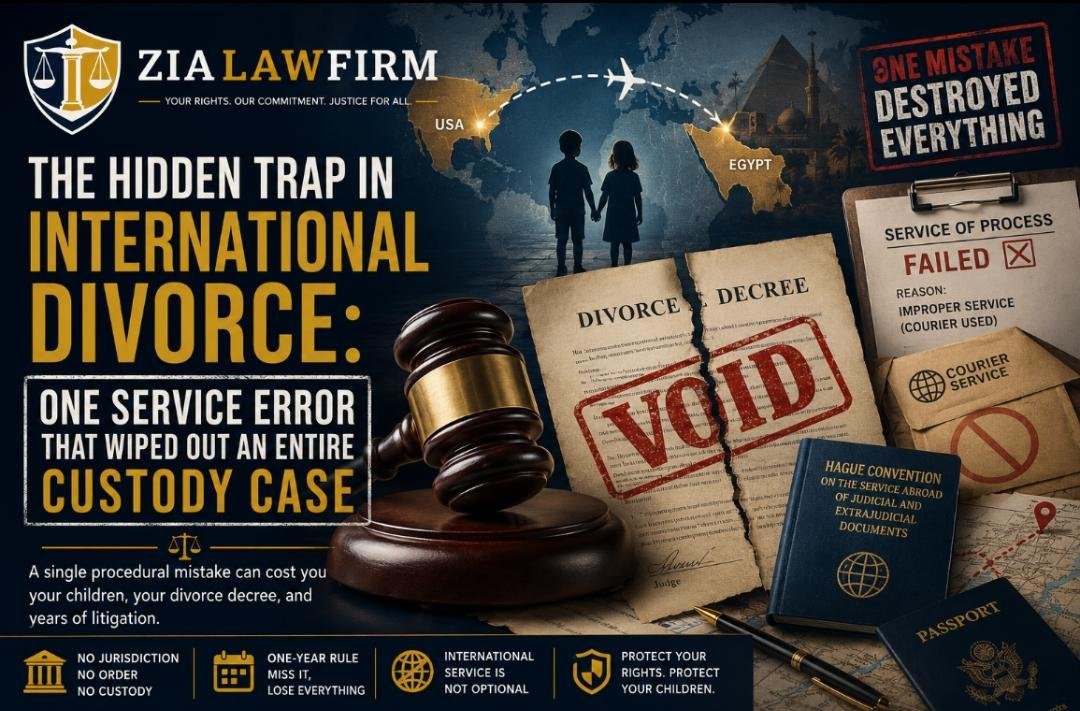
International Divorce Trap: How One Service Error Destroyed a Custody Case
Advocate Atif ziaJune 20, 2026
A single procedural mistake can cost you your children, your divorce decree, and years of litigation. Learn from Tadross v. Tadross how improper international service of process destroyed a custody case.