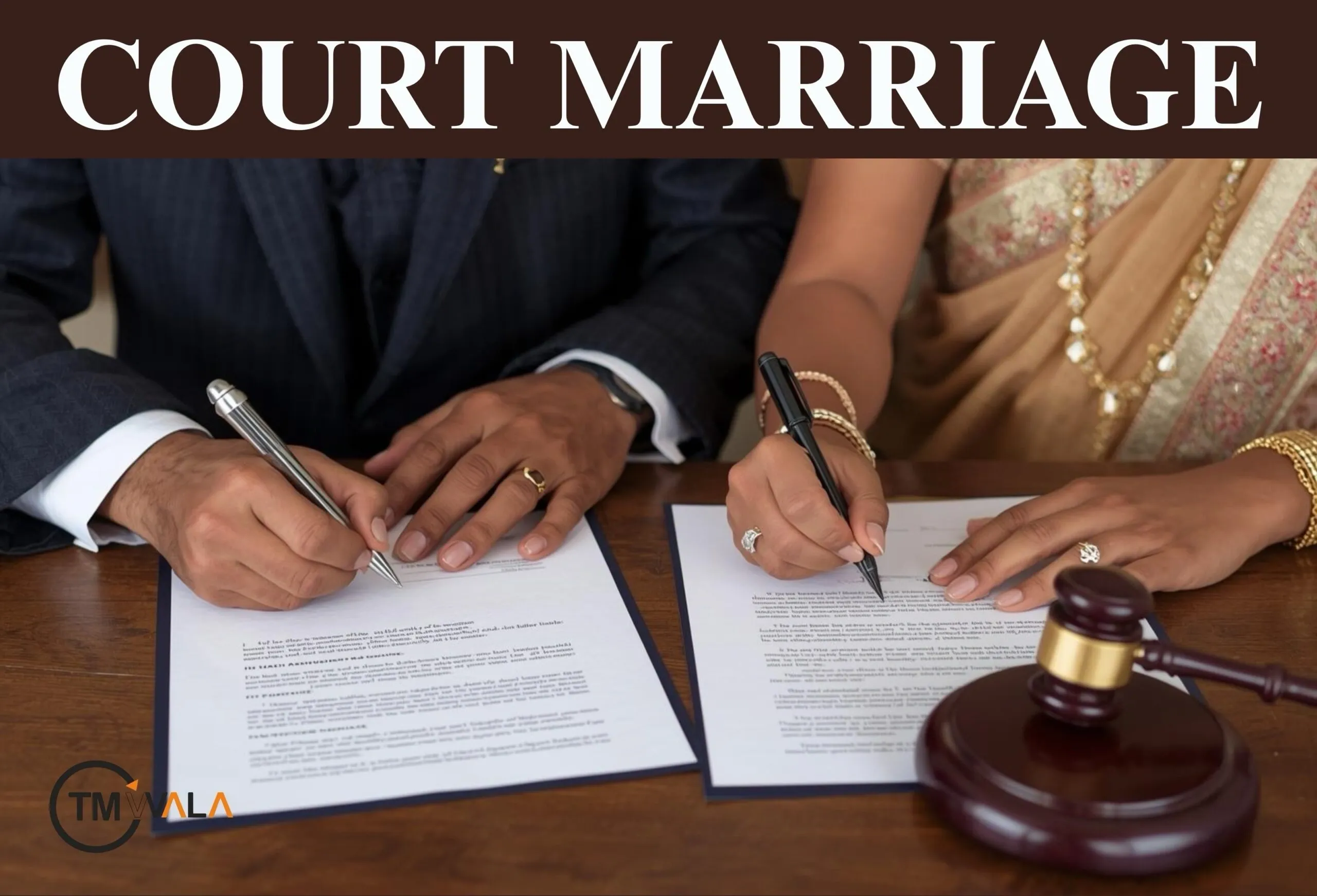
There is a moment many Pakistani couples know well — that quiet, private decision to be together, made before the world, the families, or the paperwork have had any say. For some, the path to marriage is smooth and celebrated. For others, it winds through disapproval, distance, or simply the desire for something simpler. Court marriage exists for all of them.
Often misunderstood, sometimes feared, and frequently whispered about, court marriage in Pakistan is, at its core, a straightforward legal process. It is a marriage like any other — recognized by the state, protected by law, and built on the same foundation as any traditional union: the free, willing consent of two adults.
This guide cuts through the noise. Here is what court marriage in Pakistan actually is, how it works, what it costs, and what it means for the couples who choose it.
As experienced family lawyers in Peshawar and family lawyers in Islamabad, Zia Law Firm provides comprehensive court marriage services in Peshawar and across Pakistan.
What Is a Court Marriage?
Court marriage in Pakistan is the legal solemnization and registration of a marriage conducted through a licensed Nikah Registrar or authorized legal authority, rather than through traditional family arrangements. The Nikah — the Islamic marriage contract — remains a central part of the process. What changes is the setting and the formality of consent.
The legal foundation lies in the Muslim Family Laws Ordinance of 1961, which governs the registration, rights, and responsibilities that arise from marriage in Pakistan. Under this law, any two adults who meet the legal requirements can marry of their own free will, without needing family approval.
Important: A court marriage is not a lesser form of marriage. Once properly conducted and registered, it carries exactly the same legal weight as any marriage solemnized through traditional means.
Who Can Get a Court Marriage in Pakistan?
To be eligible for a court marriage in Pakistan, both parties must meet certain conditions:
- Age: Both individuals must be at least 18 years old. In the province of Sindh specifically, this minimum applies equally to men and women. For a second marriage, where one party has been previously married, the minimum age requirement still applies.
- Free Consent: This is perhaps the most essential requirement of all. Both parties must enter the marriage willingly, without any form of coercion, threat, or undue pressure. A free-will affidavit from the bride is prepared and submitted as part of the process — a formal declaration that she is choosing this marriage of her own accord.
- Marital Status: Both individuals must be legally free to marry. If either person has been previously married, they must provide a valid divorce certificate or, in the case of a deceased spouse, a death certificate. For a second marriage while the first remains active, a permission letter from the relevant Union Council Chairperson is required.
- Religious Requirement: In Muslim marriages, both parties should be Muslim. If the bride belongs to another Abrahamic faith — Christianity or Judaism — the marriage may still proceed under specific legal provisions.
The Documents You Will Need
Gathering the right documents is the most important preparation step. Missing paperwork is the most common cause of delays. Here is what you need:
- Valid CNICs (Computerized National Identity Cards) for both parties. If a CNIC is unavailable, a passport, matriculation certificate, or Form B can substitute.
- Passport-sized photographs — typically six photos of the bride in cities like Islamabad, Rawalpindi, and Lahore; six photos of each person in Karachi.
- A free-will affidavit from the bride, confirming she is entering the marriage voluntarily.
- CNICs of two male witnesses, who must be present during the Nikah.
- Divorce certificate or death certificate, if either party has been previously married.
- For foreign nationals: a valid passport, proof of legal stay in Pakistan (visa), and a No Objection Certificate (NOC). Importantly, at least one person in the couple must hold a Pakistani identity card.
The Court Marriage Process, Step by Step
The process is more straightforward than many people expect. With all documents in order, it can typically be completed within a single day.
Consult a Lawyer (Recommended)
While not strictly required by law, working with an experienced court marriage lawyer makes the process significantly smoother. A lawyer helps prepare documentation, ensures compliance with all legal formalities, and can provide guidance if complications arise.
Prepare the Paperwork
Documents are gathered and verified. The free-will affidavit is drafted — often by the lawyer — and signed by the bride in the presence of witnesses.
Solemnize the Nikah
A licensed Nikah Khawan (officiant) performs the Nikah. This includes the Ijab-o-Qabool (offer and acceptance), Khutba-e-Nikah (the Islamic sermon), and Dua. The bride, groom, Nikah Khawan, and witnesses all sign the Nikah Nama (marriage contract) and place their thumb impressions.
Registration
The Nikah Registrar officially records the marriage and applies the official seal to the Nikah Nama. One copy is retained by the registrar, and another is submitted to the concerned Union Council.
Marriage Certificate
After registration, the couple can request a NADRA-verified Marriage Registration Certificate (MRC) from the Union Council. This is the official government document that proves the marriage in any legal or administrative context.
What Does It Cost?
The cost of a court marriage in Pakistan varies depending on the city, the specific services required, and the legal complexity of the situation. As a general range, couples can expect to pay between PKR 30,000 and PKR 50,000, though some sources cite ranges starting from PKR 20,000.
This typically includes lawyer fees, documentation preparation, the Nikah Registrar's fee, and any administrative charges. It is a fraction of the cost of a traditional wedding, which is one reason court marriage appeals to couples who want to begin their lives together without financial strain.
Cost-Effective: Court marriage is significantly more affordable than traditional weddings, making it an attractive option for couples who value simplicity and financial prudence.
Legal Protections After Marriage
One of the most important things to understand is what a court marriage actually gives you. After registration, the couple is entitled to the full suite of legal protections that come with any recognized marriage in Pakistan:
- The right to inheritance and property
- Legal standing in family courts
- Rights regarding child custody and maintenance in the event of divorce
- The right to be recognized as a spouse in all government and administrative matters
- Access to legal remedies in cases of domestic disputes
The Nikah Nama itself is a binding legal contract. Its terms — including the mehr (dower) agreed upon — are enforceable in Pakistani courts.
Facing Family Opposition: What the Law Says
One of the realities of Pakistani society is that court marriages often involve some degree of family friction. The reasons are cultural and deeply rooted — the institution of the family holds tremendous authority in Pakistani social life, and marriages that bypass family consent can be seen as a challenge to that authority.
But the law is clear: family approval is not a legal requirement for court marriage in Pakistan. Two consenting adults of legal age have the right to marry each other. This right has been affirmed repeatedly in Pakistani courts. As recently as November 2024, the Sindh High Court confirmed the fundamental right of individuals to marry by choice, ruling that adult men and women may marry according to their own wishes and that parents cannot subject their children to harassment or violence over such decisions. Law enforcement agencies are directed to protect couples who marry of their own accord.
Legal Protection: For couples who fear backlash or threats following a court marriage, legal protections are available. These include the right to request police protection, the ability to file harassment complaints, and the option to seek court orders to prevent interference from third parties.
The Social Reality: Challenges and Changing Attitudes
It would be dishonest to write about court marriage in Pakistan without acknowledging what couples who choose this path sometimes face. Social stigma remains real in many communities, particularly in more conservative or rural contexts. The term "court marriage" still carries a negative connotation in some circles, associated unfairly with rebellion or family dishonour rather than what it actually is: a legal choice made by consenting adults.
Interfaith and inter-caste couples often face additional layers of scrutiny and, in some cases, genuine danger. For these couples especially, understanding their legal rights and having proper legal support is not just helpful — it can be essential.
And yet attitudes are shifting. In urban Pakistan, court marriage is increasingly understood and accepted as a valid, modern choice. Younger generations, changing social dynamics, and growing awareness of individual rights are all reshaping how the institution is perceived. Court marriage is becoming, slowly but meaningfully, less of a whisper and more of a legitimate option openly discussed and chosen.
Can Foreign Nationals Marry in Pakistan Through Court Marriage?
Yes. Foreign nationals can undergo court marriage in Pakistan, provided they meet the documentation requirements: a valid passport, proof of legal stay in the country, and a No Objection Certificate. The critical condition is that at least one partner in the couple must hold a Pakistani CNIC. Overseas Pakistanis living abroad can also make arrangements to have a court marriage conducted during a visit to Pakistan, with proper legal coordination.
A Final Word
Court marriage in Pakistan is not a loophole or a compromise. It is a lawful, dignified, and legally complete way for two people to begin their lives together. It is chosen by couples who value simplicity, by those who face opposition and need legal protection, by people living across borders, and by those who simply believe the most important part of a wedding is the commitment — not the ceremony.
The law recognizes their choice. With the right guidance and documentation, the process is manageable. And for thousands of couples every year in Islamabad, Rawalpindi, Lahore, Karachi, Peshawar, and cities across Pakistan, it is the beginning of a marriage that is, in every meaningful sense, real.
If you are considering a court marriage, consult with a qualified family law attorney in Peshawar or family law attorney in Islamabad to understand your specific rights and requirements. Legal advice tailored to your circumstances is always the safest first step.
Useful Resources
- Peshawar High Court – Official Website
- Islamabad High Court – Official Website
- NADRA — Marriage Registration Certificate
- Supreme Court of Pakistan
For related matters, you may also want to read our guides on divorce and khula proceedings, child custody rights in Pakistan, and family law in Pakistan.
Disclaimer: This article is for general informational purposes only and does not constitute legal advice. For advice specific to your situation, consult a qualified family lawyer in Peshawar, family lawyer in Islamabad, or wherever your matter is being handled.
Need Help with a Court Marriage?
Our specialist family lawyers in Peshawar and family lawyers in Islamabad are available for confidential consultations — in person, by phone, or online.